

Stakeholders, Security Agencies, Corporate Organisations Pledge Collaboration on Public Safety and CommuniThe Olota of the Ancient and Paramount Ottaland, Awori Kingdom, His Royal Majesty, Professor Adeyemi Obalanlege, Ph.D., Lanlege Ekun II, Arole Iganmode, Olofin Apesin Olode, has convened a stakeholders’ security meeting to strengthen collaboration among security agencies, corporate organisations, traditional institutions, and community leaders towards combating crime and enhancing public safety in Otta and its environs.
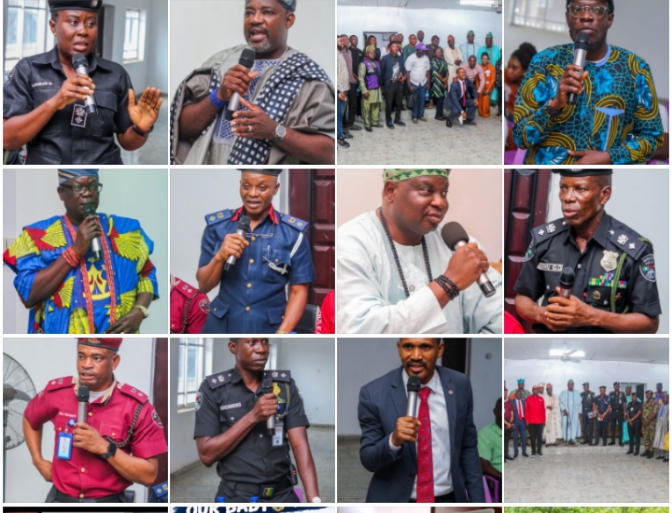
The meeting, held on Tuesday, October 13, 2026, at Gbongan Oba Isiyemi, Olota’s Palace, Otta, Ogun State, brought together representatives of corporate organisations, traditional rulers, members of the Olota-in-Council, security experts, youth leaders, civil society groups, and security agencies to deliberate on practical strategies for crime prevention, traffic management, and the protection of lives and property.
The initiative underscores the commitment of the Olota’s Palace to promoting peace, strengthening community security, and supporting sustainable development through inclusive engagement and collective responsibility.
Participants reaffirmed the need for sustained cooperation among relevant stakeholders, emphasising that effective security requires the active participation of government institutions, security agencies, businesses, traditional authorities, and residents.
The meeting was guided by the widely acknowledged principle that security is a collective responsibility and that coordinated efforts are essential to addressing emerging security challenges.
Beyond security concerns, the meeting devoted considerable attention to traffic management and road safety, particularly in anticipation of the completion of the ongoing reconstruction of the Otta–Idiroko Road and the Lagos–Ota–Abeokuta Expressway.
Stakeholders expressed concern over traffic congestion, indiscriminate parking, roadside trading, and other activities that obstruct the free movement of vehicles and pedestrians along major roads.
Particular attention was given to the Oju Ore Bridge axis, Tollgate (Ilo Awela), and other identified locations where traffic congestion and road safety challenges require coordinated and sustainable interventions.
The meeting called for measures to restore order along major traffic corridors, including encouraging traders operating on carriageways and road shoulders to relocate to designated markets and appropriate trading locations.
Transport operators were similarly urged to conduct their activities from suitable, designated locations rather than obstructing major roads and adjoining public spaces.
Stakeholders observed that the unauthorised occupation of road corridors, roadside trading, and indiscriminate parking not only contribute to traffic congestion but may also expose road users to avoidable safety and security risks.
They therefore stressed the importance of public sensitisation, effective enforcement of relevant regulations, and greater cooperation among traffic management authorities, community leaders, market associations, and transport unions.
The overall objective, they noted, is to promote safer roads, improve traffic flow, and create a more orderly environment for residents, businesses, commuters, and visitors to Otta.
In a demonstration of corporate commitment to the safety, growth, and development of their host community, participating companies expressed their willingness to collaborate with security agencies and support appropriate community development initiatives.
The Sona Group emerged as a key corporate stakeholder, proposing interventions aimed at improving public safety, traffic management, and the physical environment in strategic parts of Otta.
Among the proposed areas of intervention are the installation of security and traffic lights at strategic locations, the beautification of roundabouts, particularly around the Oju Ore under-bridge axis, and other infrastructure-related improvements.
These initiatives, when developed and implemented in consultation with the relevant authorities, are expected to contribute to a safer, cleaner, more organised, and aesthetically improved urban environment.
The discussions also highlighted the importance of corporate social responsibility and public-private partnerships in complementing government efforts to address pressing community challenges.
Stakeholders noted that collaboration between businesses, public institutions, and traditional authorities could provide a sustainable framework for addressing infrastructure gaps, improving public spaces, and strengthening community safety.
The meeting attracted representatives of several corporate organisations operating in Otta and its environs, alongside officers and representatives of security and law enforcement agencies.
The participating security formations included the Nigeria Police Force, represented by its Area Command and Divisions; the Nigerian Navy; the Nigeria Security and Civil Defence Corps (NSCDC), represented by its Area Command and Divisions; the Federal Road Safety Corps (FRSC); the National Drug Law Enforcement Agency (NDLEA); and the Ogun State Traffic Compliance and Enforcement Agency (TRACE).
Other participants included representatives of additional security formations, local hunters, youth leadership, civil society organisations, and other relevant community stakeholders.
The broad-based participation reinforced the importance of a coordinated, multi-stakeholder approach to addressing security challenges, strengthening intelligence-sharing, improving traffic management, and sustaining peace throughout the kingdom.
The engagement also provided an opportunity for stakeholders to identify areas requiring closer cooperation and to explore practical measures for improving the effectiveness of existing security and public safety initiatives.
The meeting also featured a representative of Laralek Construction Company, the contractor handling the ongoing reconstruction of the Otta–Idiroko Road.
In its engagement with the company, the meeting emphasised the need to incorporate appropriate bus-stop terminals and adequate road signage into the project deliverables, while addressing identified areas requiring further improvement.
Stakeholders stressed that the successful completion of the road project should go beyond the provision of a reconstructed carriageway to include essential safety features that support efficient transportation and protect road users.
They underscored the importance of proper road signage, appropriately located bus-stop facilities, and other relevant traffic management measures in ensuring that the completed infrastructure meets the needs of the growing population and commercial activities in Otta and neighbouring communities.
The meeting further emphasised that road safety, accessibility, quality, and functionality must remain integral considerations throughout the reconstruction process.
These recommendations are particularly significant given the strategic importance of the Otta–Idiroko corridor to commuters, commercial transport operators, businesses, and residents travelling within Ogun State and beyond.
To allow for further consultations, broaden stakeholder participation, and develop more comprehensive responses to the issues raised, the meeting is scheduled to reconvene on Tuesday, October 20, 2026.
The follow-up meeting is expected to provide an opportunity for stakeholders to deepen discussions, consider additional recommendations, and work towards practical solutions to the identified security, traffic management, and environmental challenges.
The proposed continuation of the engagement reflects a recognition that sustainable solutions require regular consultation, clearly defined responsibilities, and consistent collaboration among all relevant parties.
By bringing security agencies, corporate organisations, traditional institutions, youth leaders, civil society groups, and other stakeholders together on a common platform, the Olota has continued to demonstrate the relevance of traditional institutions in promoting dialogue, encouraging community participation, and complementing government efforts towards public safety and sustainable development.
The initiative also reinforces the need for a shared commitment to maintaining peace, protecting lives and property, improving road safety, and creating an environment in which businesses and communities can thrive.
As Otta continues to experience significant commercial and urban activity, sustained cooperation among government agencies, security formations, private organisations, and community institutions will remain essential to building a safer, better-organised, and more prosperous Ottaland.
Signed:
Prince Adeyemi Sulaimon Olusesi
Principal Secretary to His Majesty,
The Olota of the Ancient and Paramount Ottaland,
Awori Kingdom.
